
Before getting interested in wine, looking for a bottle was daunting. Bottles spanned from different countries to different types and different grapes that all together could make one feel intimidated. Not knowing what was being read left me scouring the internet for information, a disheartening experience all because I never knew what I was looking at let alone should be looking for. This was the beginning of a long process of breaking everything down, word by word. The experience of trial and error eventually gave me a better idea of what one should understand getting closer to their ideal bottle.
This short guide is for novices as well as those who know little and are seeking more, so let’s get started!
We’ll break it down to the two key differences in wine labeling and this depends on whether the country is either old world or new world.
Old World Wines:
( Examples: Italy, France, Germany, Spain, Portugal )
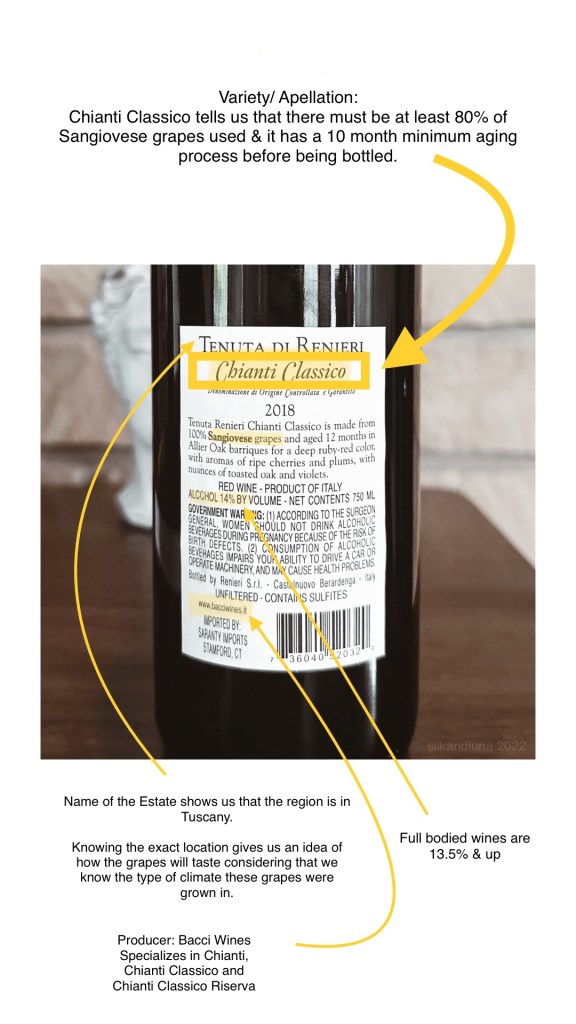
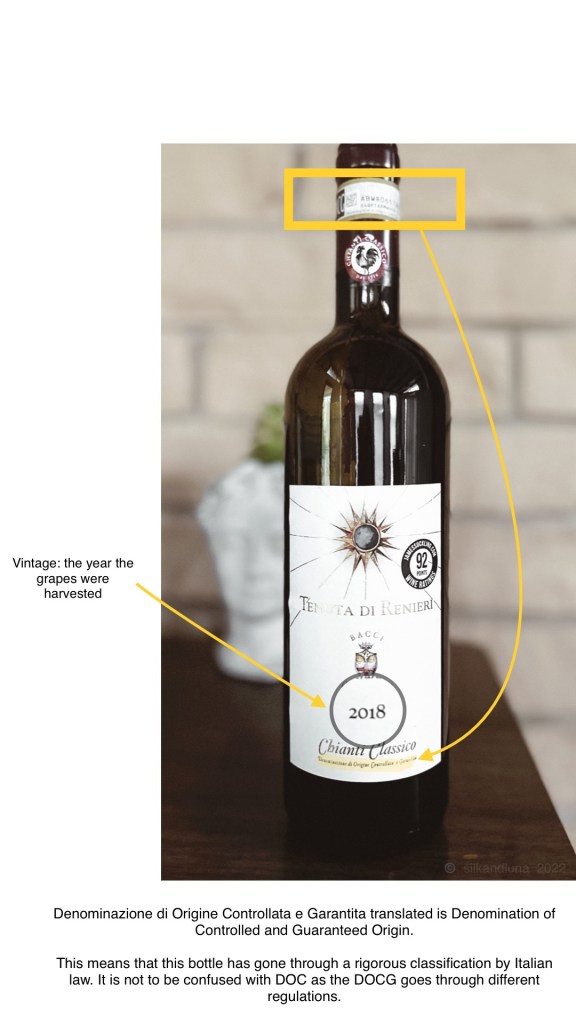
In Old World bottles, knowing the regions will help you immensely in deciphering which grapes might be inside the bottle, as they never say the grape variety as they do in New World wines. Also to note is that you want to find a bottle that gives you more detail on the location of said grapes. This information leads to regions and the climate of the year listed.
New World Wines:
(Examples: USA, Australia, New Zealand, Canada, Mexico, South Africa)

You’ll soon come to notice that American wines are typically higher in alcohol, red wines in particular. New world wines are therefore more commonly full bodied.
Last and less common is a newer concept. These wines often go by a made-up name and are often vague on what the bottle may contain, but they are fun to look at because of their choice of design. These types of wines are less nuanced and more of a showoff, but you will find some exceptions.
Additional Tips
If you see a bottle that displays contains sulfites, know that this is only a label requirement in some countries.
It may seem a lot now, but once you’ve got the basic understandings of where your wine is coming from, the better your tasting experience will be. Don’t be afraid to ask questions from your bartender, wine shop owner or anyone else that is knowledgeable about the product; continue exploring and enjoy!
– Silk & Luna

 Crimson & Cork
Leave a comment